Easiest Way to Get a Personal Loan in America
(Complete & Updated Guide – 2026)
Getting a personal loan in the United States has become significantly easier over the last few years. With the rise of online lenders, fintech platforms, and smarter credit evaluation systems, many borrowers can now get approved within minutes and receive funds in just a few business days.
This guide explains the easiest and most practical ways to get a personal loan in America in 2026. It covers eligibility, credit scores, documents, interest rates, lender types, approval strategies, and common mistakes, all explained in a simple and realistic manner.
This article is useful for US citizens, permanent residents, immigrants, salaried professionals, freelancers, and first-time borrowers.
1. What Is a Personal Loan in the United States?
 |
A personal loan is an unsecured form of credit. This means you do not need to pledge any asset such as a house, car, or property as security.
In most cases, personal loans come with a fixed interest rate and fixed monthly payments, making them predictable and easy to manage.
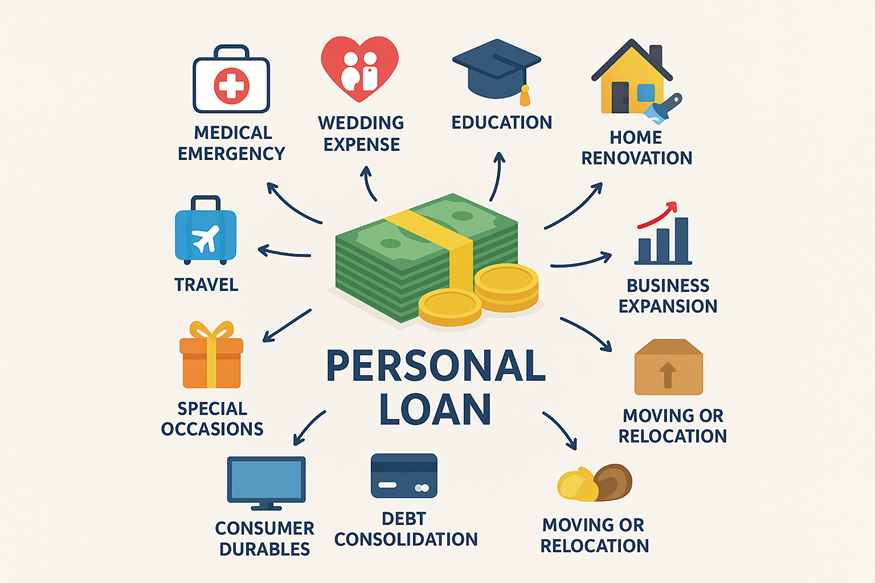
Common reasons people take personal loans include debt consolidation, medical expenses, emergency cash needs, relocation costs, weddings, travel, or setting up a small business or freelance work.
2. Why Getting a Personal Loan Is Easier in America
The US lending system is primarily based on credit behavior rather than physical assets. Lenders focus on how responsibly you have managed money in the past.
Several factors make borrowing easier in the US compared to many other countries.
First, nationwide credit bureaus maintain detailed credit histories.
Second, standardized credit scores such as FICO and VantageScore help lenders assess risk quickly.
Third, there is intense competition among banks, credit unions, and online lenders.
Finally, digital verification systems allow instant checks of identity, income, and banking data.
If your credit profile is reasonable, approval is often fast and straightforward.
3. Easiest Ways to Get a Personal Loan in America
3.1 Online Personal Loan Lenders (The Simplest Option)
 |
Online lenders are currently the easiest and fastest way to get a personal loan.
Platforms such as SoFi, LendingClub, Upstart, and Avant allow borrowers to check eligibility online within minutes.
Most online lenders start with a soft credit check, which does not affect your credit score. Approval decisions are quick, paperwork is minimal, and funds are usually deposited within one to three business days.
These lenders are especially suitable for people with fair or average credit scores, freelancers, immigrants, and borrowers who need quick access to funds.
3.2 Credit Unions (Easy and Low-Cost)
Credit unions are member-owned financial institutions and are often more flexible than traditional banks.
They typically offer lower interest rates and are more willing to look at your overall financial situation instead of relying only on algorithms.
In most cases, becoming a member is simple and inexpensive. The main limitation is that credit unions may not be available everywhere or may take slightly longer than online lenders.
3.3 Traditional Banks (Easy for Strong Credit Profiles)
 |
Large banks such as Bank of America, Wells Fargo, and Chase offer personal loans, but approval is usually easier only if you already have a good credit score and a stable income.
Banks prefer borrowers with a credit score above 700 and an existing relationship such as a checking account or credit card.
For first-time borrowers or people with lower credit scores, banks are usually not the easiest option.
3.4 Employer or Payroll-Based Loans
Some employers in the US offer salary advance programs or partner with lending platforms that provide payroll-based loans.
These loans are easier to get because repayment is linked to your paycheck. However, availability depends entirely on your employer.
4. Minimum Requirements for a Personal Loan in the USA
4.1 Credit Score Requirements
Credit score is the most important factor in loan approval.
A score above 750 makes approval extremely easy.
Scores between 700 and 749 are generally considered good.
Scores between 650 and 699 still qualify with many lenders.
Below 600, approval becomes difficult but not impossible.
Some lenders approve loans even for scores in the 580 to 620 range, though interest rates are higher.
4.2 Income Requirements
Most lenders require proof of regular income. This can come from employment, freelancing, or business activity.
A monthly income of around $1,200 to $2,000 is usually sufficient for small to medium-sized loans.
4.3 Age and Residency
Borrowers must be at least 18 years old, have a valid Social Security Number or ITIN, and maintain a US bank account.
5. Documents Needed for a Personal Loan
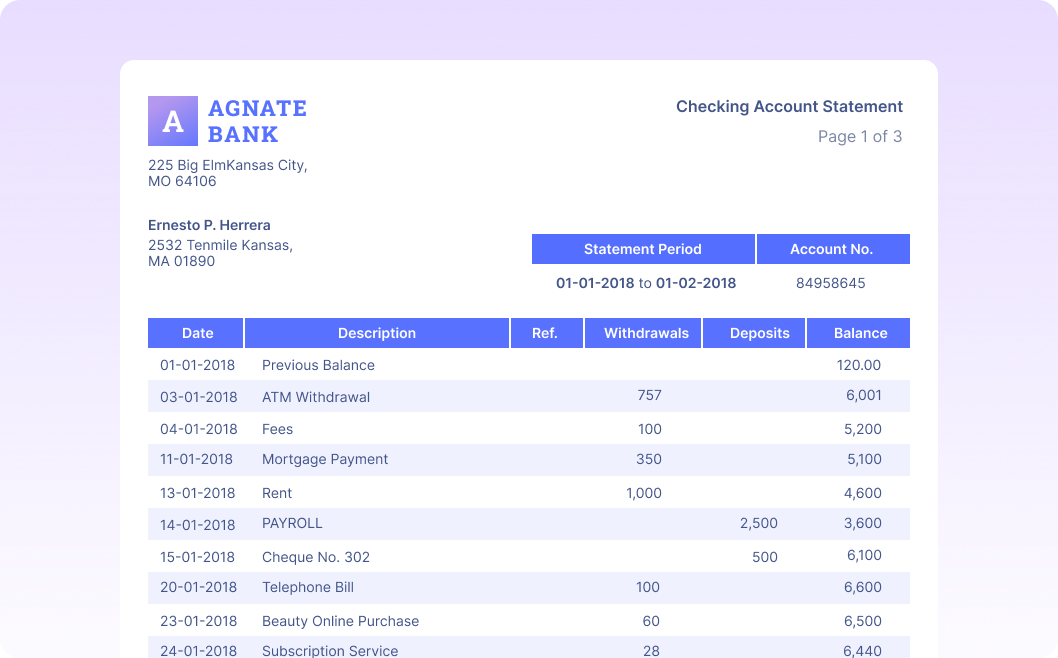 |
| This chart\image is just for rought idea, not official image from our community |
In most cases, documentation is completely digital.
Lenders typically ask for identity verification, SSN or ITIN details, bank account information, and proof of income such as pay stubs or bank statements.
Physical paperwork is rarely required by online lenders.
6. Interest Rates in America (2026 Overview)
Interest rates depend heavily on credit profile.
Borrowers with excellent credit usually receive rates between 6 and 9 percent.
Good credit borrowers often see rates between 9 and 14 percent.
Fair credit scores result in rates from 15 to 24 percent.
Poor credit can lead to rates as high as 25 to 36 percent.
Rates also depend on loan amount, loan term, and income stability.
7. How to Increase Approval Chances
Pre-qualification tools should always be used first, as they do not affect your credit score.
Applying with a co-signer can significantly improve approval chances and reduce interest rates.
Keeping credit card usage below 30 percent of limits helps your credit profile.
Shorter loan terms are often easier to get approved and cost less in interest.
Avoid applying right after switching jobs, as lenders prefer stable employment.
8. Common Mistakes to Avoid
Applying to multiple lenders at the same time can harm your credit score.
Many borrowers focus only on monthly payments and ignore APR, which leads to higher long-term costs.
Guaranteed approval offers are often scams and should be avoided.
Payday loans should be avoided entirely due to extremely high interest rates.
9. Can You Get a Loan Without Credit History?
It is possible, but options are limited.
Loans with co-signers, credit union starter loans, and certain AI-based lenders are the most realistic choices. Secured loans are a last resort.
10. Step-by-Step Strategy for Beginners
First, check your credit score using a free service.
Second, pre-qualify with multiple online lenders.
Third, compare interest rates and total loan cost.
Fourth, choose the option with the lowest APR, not just the lowest monthly payment.
Finally, accept the offer and receive funds.
The entire process usually takes anywhere from 15 minutes to three days.
Final Thoughts
In 2026, online personal loan lenders remain the easiest and fastest way to get a personal loan in America.
If you have a fair credit score, stable income, and a US bank account, your chances of approval are high.
